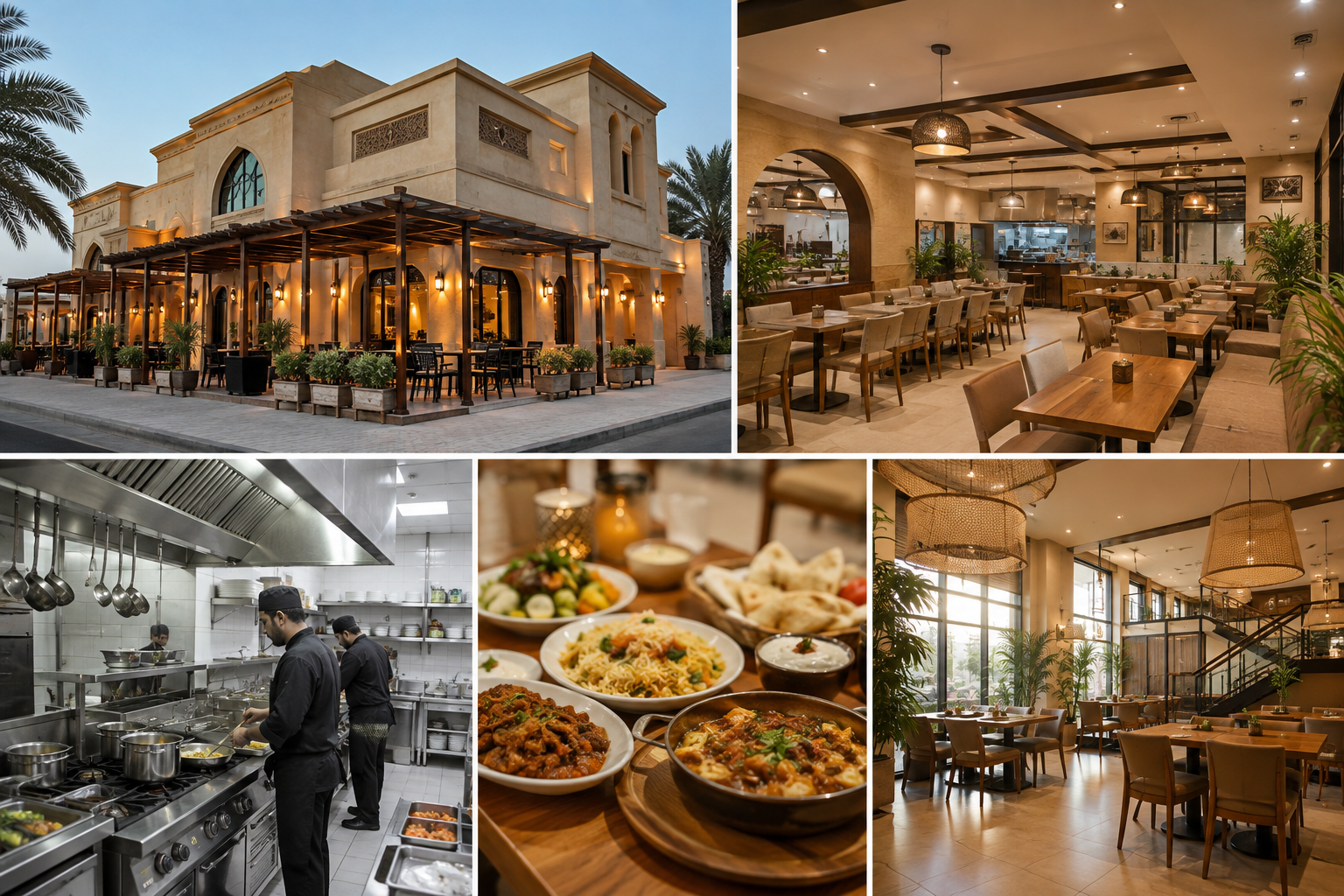
Restaurant Partnership Opportunity in Ajman and Sharjah: A Ready Made Business Investment
The restaurant industry in the United Arab Emirates continues to attract entrepreneurs and investors who are looking for established businesses with existing customers, operational systems, and revenue potential. Starting a restaurant from the beginning can require significant time, capital, planning, staffing, licensing, equipment, marketing, and operational management. For investors who want to avoid many of these initial challenges, joining an already established restaurant through a business partnership can provide an attractive alternative.
A restaurant partnership opportunity is currently available involving Ali Mandoos Restaurant and Kitchen. The business is located in the Al Nekhailat area of Sharjah and presents an opportunity for an interested investor to join an existing restaurant operation on a fifty fifty partnership basis. According to the available property and business information, the restaurant is already operational, has workers and staff in place, and is positioned as a ready made business opportunity for someone interested in entering or expanding within the food and restaurant sector.
This opportunity is particularly relevant for entrepreneurs who understand the food service industry and want to participate in an operating business instead of spending months establishing a new restaurant. The existing operation provides a foundation from which a new partner can contribute capital, management expertise, marketing ideas, business development strategies, or other resources that can help the restaurant continue growing.
Established Restaurant Business
One of the most important advantages of this opportunity is that the restaurant is already established and successfully running. An established restaurant can provide several benefits compared with a completely new business. The investor does not necessarily need to begin by searching for a suitable location, designing an entire restaurant concept, purchasing all equipment, recruiting a complete workforce, or creating operational procedures from nothing.
The restaurant is described as fully operational, meaning that the business is already functioning and serving customers. This can make the transition for a new partner significantly easier. Instead of waiting for construction, renovation, licensing, recruitment, and opening procedures to be completed, an interested partner may be able to become involved immediately after completing the necessary business discussions and agreements.
The availability of existing workers and staff is another important feature. Human resources are essential in restaurant operations because daily service depends on cooks, kitchen workers, servers, cleaners, supervisors, and other employees performing their responsibilities efficiently. Recruiting an entire restaurant team can be challenging, particularly in a competitive hospitality market. Having staff already available can reduce the operational burden for a new investor.
Prime Location
Location plays a major role in the success of any restaurant business. A restaurant can have excellent food and service, but accessibility and surrounding customer activity can strongly influence sales and long term performance. The available restaurant opportunity is associated with the Al Nekhailat area of Sharjah, providing the business with a location within the wider Sharjah market.
Sharjah is one of the major emirates in the United Arab Emirates and has a large residential and commercial population. The emirate has a diverse customer base that includes families, professionals, workers, students, and business communities. Restaurants operating in suitable residential and commercial areas can benefit from demand for daily meals, takeaway food, delivery services, family dining, and other food related services.
A potential investor should still conduct personal due diligence regarding the exact location, surrounding businesses, parking availability, accessibility, customer traffic, delivery demand, rental arrangements, and future development in the area. These factors can provide a clearer understanding of the restaurant’s commercial potential.
Excellent Daily Sales
The business description states that the restaurant has excellent daily sales. Existing sales performance is one of the most important factors that a prospective partner should examine before entering a restaurant partnership.
Daily sales can provide valuable information about customer demand and business activity. However, sales revenue should not be confused with net profit. A restaurant may generate strong sales while also having significant expenses involving rent, salaries, food ingredients, utilities, delivery platforms, maintenance, licenses, supplies, marketing, and other operating costs.
For this reason, any serious investor should request appropriate financial documentation before making a final investment decision. Financial records can help establish the restaurant’s actual performance and allow the prospective partner to understand revenue, expenses, gross margin, operating costs, and net profit.
A transparent review of the restaurant’s financial history can also help both parties establish realistic expectations. A professional partnership agreement should clearly explain how profits and losses are calculated and distributed.
Fifty Fifty Partnership Structure
The proposed arrangement is based on a fifty fifty partnership. This means the business opportunity is intended for a partner who will join the existing business with an equal partnership structure.
A fifty fifty arrangement can be attractive when both parties are prepared to contribute meaningfully to the business. Equal ownership can provide both partners with an opportunity to participate in important business decisions and share the financial results of the operation.
However, an equal partnership should always be supported by a clear written agreement. The agreement should explain the responsibilities of each partner, capital contributions, ownership rights, profit distribution, loss responsibilities, management authority, employee decisions, purchasing authority, accounting procedures, bank account access, future investment requirements, and procedures for resolving disagreements.
The agreement should also establish what happens if one partner wants to leave the business. Exit procedures are important because circumstances can change over time. A well prepared partnership agreement can protect both parties and reduce the possibility of future disputes.
Ready To Join Immediately
Another attractive feature of this restaurant opportunity is that the business is already operational and ready for a new partner to join. For entrepreneurs who want to enter the restaurant market quickly, this can be more convenient than starting a new restaurant.
Opening a new restaurant usually involves selecting a location, negotiating a lease, preparing a business plan, obtaining required approvals, purchasing kitchen equipment, arranging furniture, designing the interior, recruiting employees, creating menus, establishing suppliers, promoting the business, and attracting the first customers.
An operating restaurant can eliminate or reduce many of these initial stages. The new partner can potentially focus on improving existing operations and identifying opportunities for growth.
This does not mean that the business requires no work. Every restaurant needs consistent management, quality control, financial supervision, customer service, employee management, purchasing, hygiene standards, and marketing. The advantage is that these systems can already have a foundation in place.
Existing Employees and Operational Support
The availability of workers and staff is an important advantage for an investor who does not want to build a team from scratch. Restaurant employees often develop practical knowledge about food preparation, customer service, cleaning, inventory management, and daily operations.
Existing staff can also help maintain continuity when ownership or partnership arrangements change. Customers may continue receiving familiar products and services, while the new partner becomes familiar with the operation.
Nevertheless, an incoming partner should understand the existing workforce structure. It is advisable to review employment arrangements, salaries, working hours, responsibilities, accommodation arrangements where applicable, employment documentation, and other obligations before entering the partnership.
Understanding the team can help the new partner determine whether additional employees, training, or management positions will be required in the future.
Potential for Business Growth
An established restaurant can provide multiple opportunities for future development. Once a new partner understands the existing operation, the partners may explore strategies designed to increase revenue and improve profitability.
One possible area is digital marketing. Restaurants can use social media platforms, online advertising, customer reviews, promotional campaigns, and local digital communities to attract new customers. Strong online visibility can be particularly useful for restaurants that offer takeaway and delivery services.
Another opportunity may involve menu development. The partners can evaluate which dishes generate the strongest customer demand and which products provide healthy margins. Introducing new dishes while maintaining popular existing items can help keep the menu attractive.
Delivery services may also provide opportunities for additional revenue. Many customers increasingly use online platforms to order meals from restaurants. A restaurant that has an efficient delivery system can potentially reach customers beyond its immediate physical location.
Customer loyalty is another important area. Restaurants can encourage repeat business through consistent food quality, professional service, attractive promotions, and loyalty programs.
Importance of Due Diligence
Although the opportunity appears attractive based on the information provided, every prospective investor should conduct thorough due diligence before committing money.
The first step should be verifying the identity and ownership of the business. The prospective partner should confirm who legally owns the restaurant and whether the person offering the partnership has the authority to enter into the proposed agreement.
The investor should also review the restaurant’s licenses and permits and confirm that the business is operating legally. Any outstanding obligations should be identified before the partnership is finalized.
Financial due diligence is equally important. A serious investor should request sales records, expense records, bank statements where appropriate, supplier invoices, rent information, payroll information, and other relevant financial documents.
The investor should also determine whether the business has outstanding debts or financial obligations. Existing liabilities should be clearly disclosed and addressed in the partnership agreement.
The physical condition of the restaurant should also be inspected. Kitchen equipment, refrigeration systems, cooking equipment, furniture, electrical systems, plumbing, ventilation, storage areas, and other facilities should be evaluated.
Property and Building Information
The available information also provides several property related details. The listing indicates a two floor structure with one flat and a building condition described as one year. The stated surface area is approximately 52 while the land area is approximately 63 square feet according to the supplied listing information.
The payment method is described as cash or installments. Because these measurements and property details can be interpreted differently depending on the original listing and local property documentation, prospective buyers or partners should verify the exact dimensions, ownership status, permitted usage, and payment terms directly with the seller.
If the restaurant partnership is connected to a property transaction, the investor should clearly distinguish between purchasing a property and purchasing or joining a restaurant business. These are separate commercial considerations and may involve different agreements, costs, ownership structures, and legal requirements.
Investment Considerations
A restaurant partnership can offer an interesting investment opportunity, but it also carries business risks. Restaurant performance can be affected by food prices, competition, rent, labor expenses, customer preferences, economic conditions, seasonal demand, and changes in operating costs.
A successful partnership therefore requires more than financial investment. Both partners should have a clear understanding of their respective roles and responsibilities.
One partner may focus on daily restaurant management while the other may contribute financial resources, marketing knowledge, supplier relationships, or business development experience. The exact arrangement should be agreed upon before the partnership begins.
Communication is also essential. Regular financial reporting and business meetings can help both partners understand the restaurant’s performance and make informed decisions.
Who May Be Interested in This Opportunity
This restaurant partnership may be suitable for an entrepreneur who already has experience in the food and beverage industry or someone who has strong business management skills and wants to enter the restaurant market.
It may also appeal to an existing restaurant owner who wants to expand into another location or business concept. An investor with experience in marketing, operations, finance, hospitality, or customer service may also be able to contribute valuable expertise.
The opportunity may be particularly attractive to someone who prefers an existing operation instead of building a new restaurant from the ground up.
Final Thoughts
The Ali Mandoos Restaurant and Kitchen opportunity in the Al Nekhailat area of Sharjah represents a potentially interesting option for investors searching for an established restaurant business with an existing operation, staff, daily sales, and a proposed fifty fifty partnership structure.
The ability to join an operational restaurant can save significant time compared with establishing a completely new business. Existing staff and operating systems can provide a practical foundation, while an incoming partner may bring new capital, ideas, management experience, marketing strategies, or expansion plans.
At the same time, prospective investors should approach the opportunity professionally and carefully. Claims regarding sales, profitability, ownership, property details, and business performance should be independently verified before any payment or agreement is made.
The most important step is to conduct complete due diligence and establish a legally binding partnership agreement that protects both parties. Financial records, licenses, ownership documents, employee information, property arrangements, operating expenses, and existing liabilities should all be reviewed.
For a serious entrepreneur, an established restaurant can provide a valuable starting point for building a larger hospitality business. With proper management, transparent financial practices, strong customer service, consistent food quality, effective marketing, and clear cooperation between partners, an existing restaurant operation may have opportunities for further development.
Interested investors should contact the seller for additional information, arrange a suitable meeting, inspect the restaurant personally, review the available documentation, and discuss the proposed fifty fifty partnership structure in detail before making a final decision.
This opportunity is presented as a business partnership prospect based on the information supplied in the original listing. Investors should independently verify all business, financial, property, legal, and operational information before entering into any transaction.